EAP connectivity
Connect FUJI, Panasonic and ASM SMT equipment for unified status and production-data acquisition.

From SMT equipment connectivity and rapid changeover to wafer genealogy, AI defect recognition and process prediction, these customer practices show how VSKYSOFT turns manufacturing data into an operational loop.
View case directory ↓Select a case title to jump directly to its details. Each case is based on the supplied project material; no unverified outcomes have been added.
The vivo smartphone brand of Guangdong Vivo Communication Co., Ltd. entered the mobile-phone market in 2011, with the X, Xplay and Y product families. Beyond mainland China, vivo also expanded into markets including India, Thailand and Myanmar.
The project covered multiple equipment groups and business units, including FUJI M8, FUJI M2, Panasonic NPM and ASM. VSKYSOFT delivered software capabilities for equipment automation, production error prevention, traceability, material preparation and line changeover.

Connect FUJI, Panasonic and ASM SMT equipment for unified status and production-data acquisition.
Link equipment, materials and production records to support poka-yoke controls and end-to-end genealogy.
Provide a centralized remote-access path for equipment software support and multi-site collaboration.
Move material preparation ahead of line loading to reduce waiting and improve preparation accuracy.
Coordinate equipment, programs, materials and work orders to shorten line-change preparation.
Starting at wafer release, bind production, equipment, tooling, process, quality, packaging and inventory data to one identity—supporting forward, backward, vertical, horizontal and exception traceability.
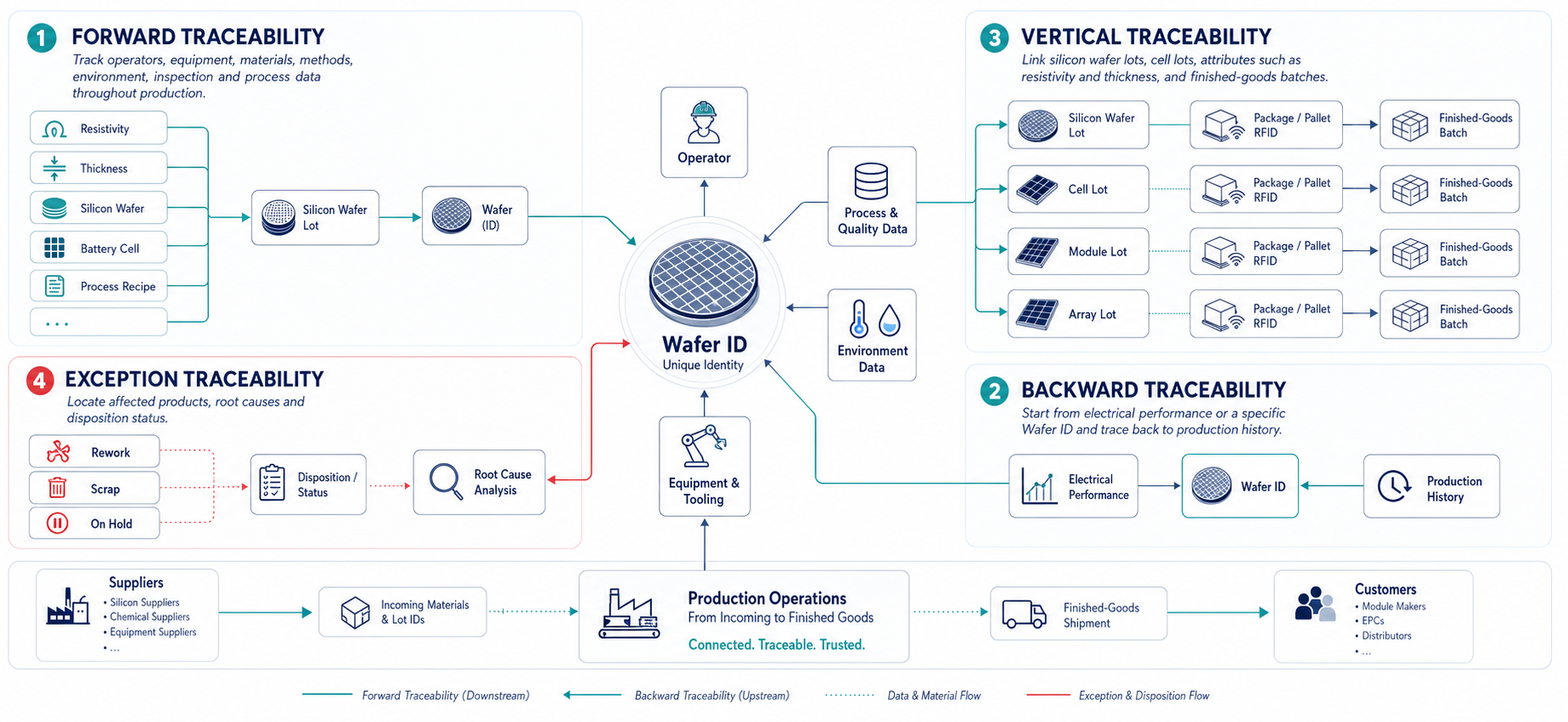
Machine identity, status, run parameters, production time and lot
Tools, fixtures, inspection assets, calibration and usage history
IQC, IPQC, OQC / FQC and a wafer-level quality record
Route, version, recipe, critical parameters and change history
Package lot, pallet / carton, inventory receipt and movement
Deep learning and machine vision automatically recognize, classify and mark defects in EL, PL and appearance images—including location, type and severity.

Classification goes beyond the image and connects to its complete manufacturing context.
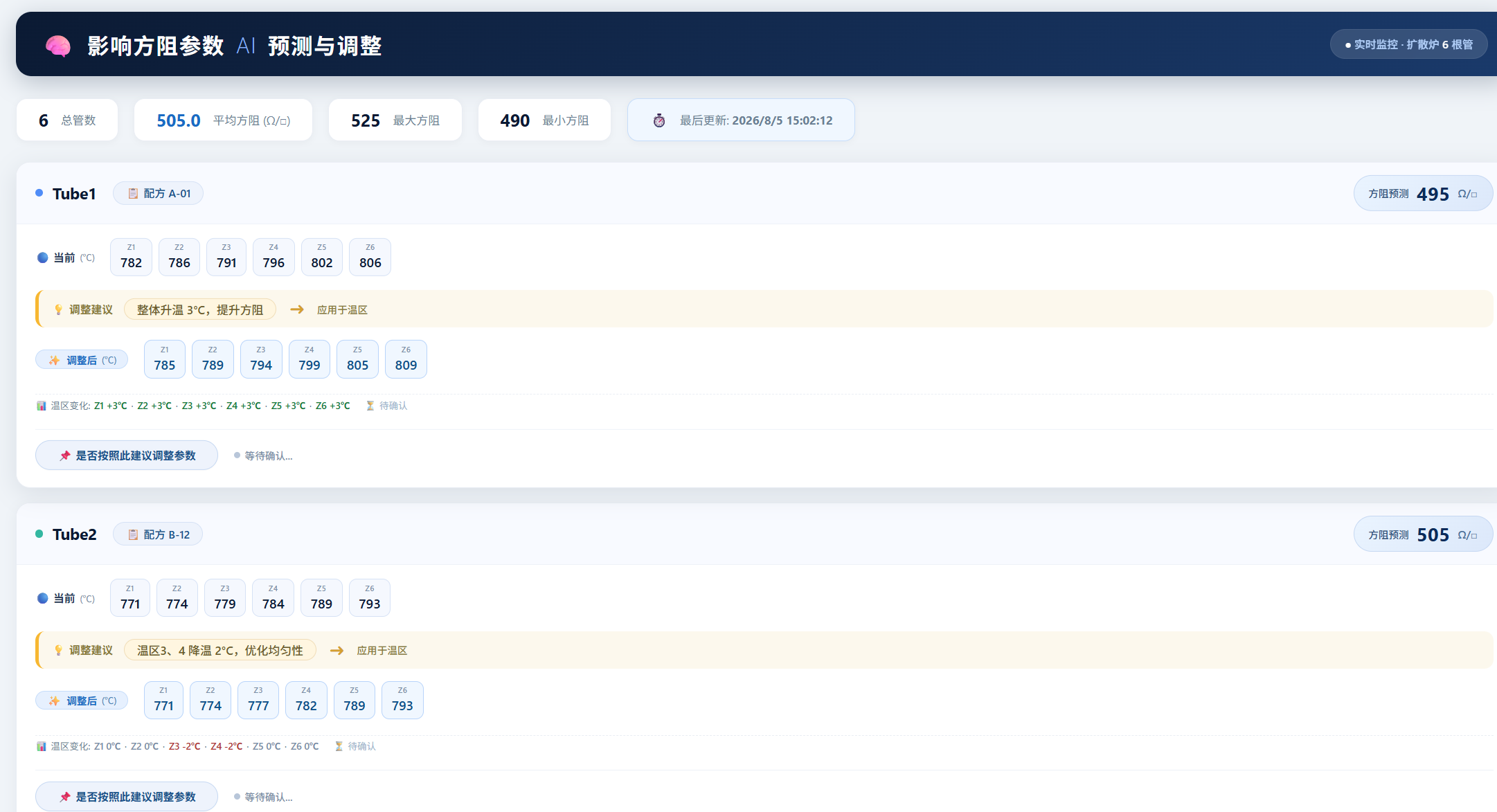
Fuse equipment history, real-time parameters, inspection, lot, environment and machine state to predict next-lot risk and generate recommendations that can be executed and verified.
Fuse historical and real-time data to predict risk for the next lot.
→Identify parameter impact, trends and the optimal process window.
→Recommend changes to temperature zones, gas flow, process time and machine settings.
→Validate results after parameter dispatch and continuously improve the model.
↻
Link efficiency grade, route, equipment, critical settings and inspection results by Wafer ID; classify high-efficiency, low-efficiency and failed cells, then benchmark production lines.